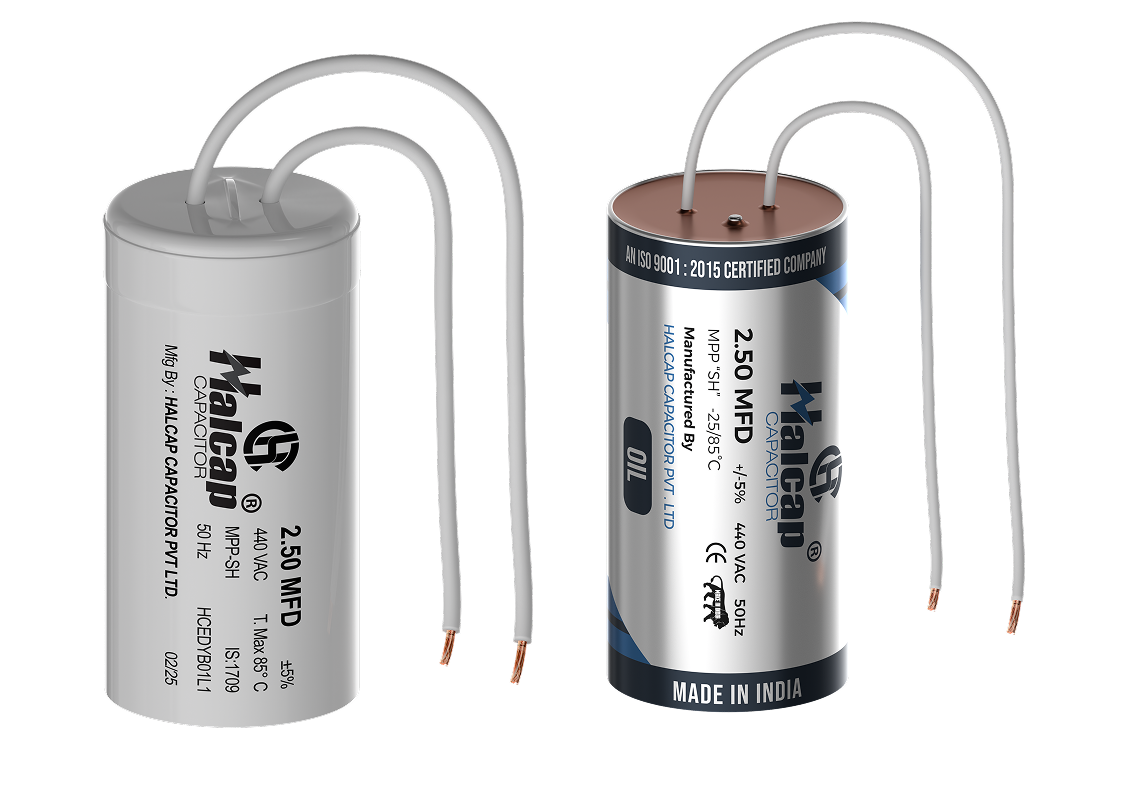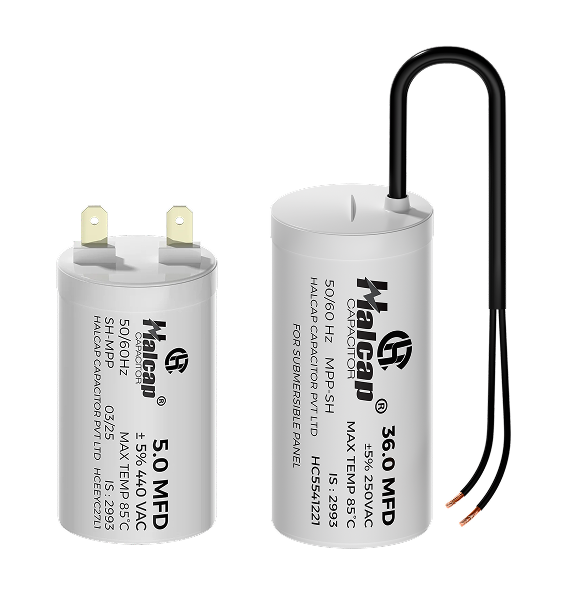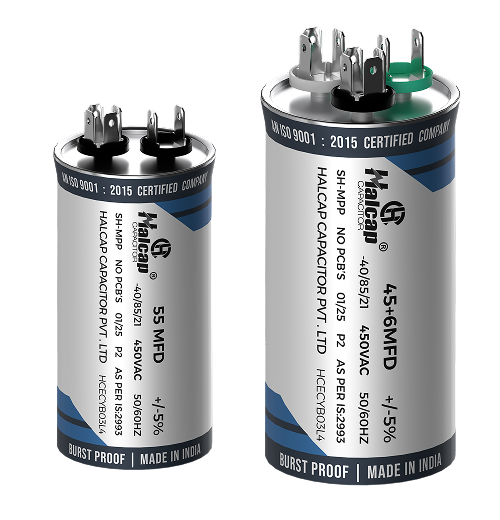





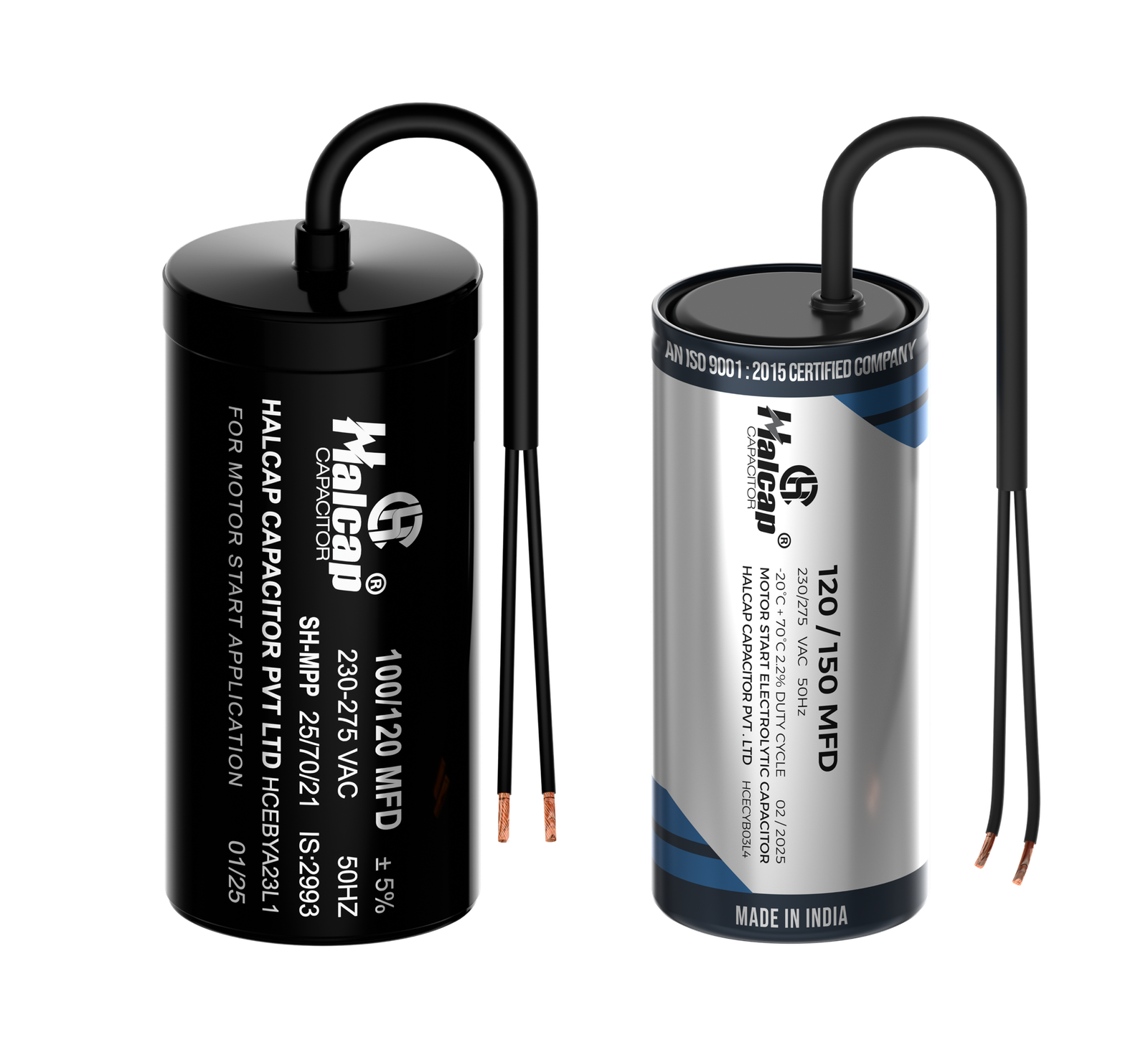
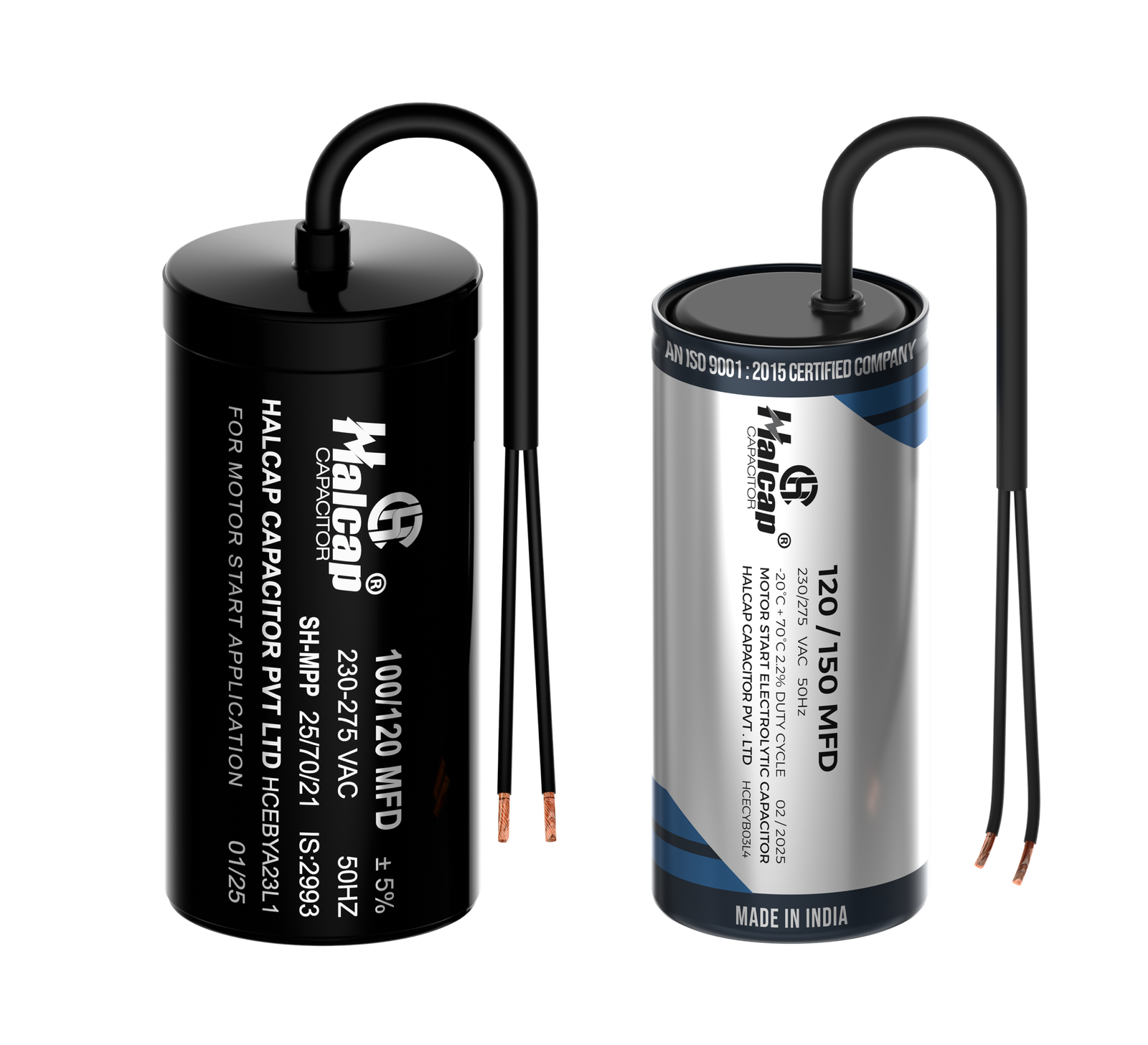
Key Features
Wide Voltage
Suitable for 275VAC, 50/60Hz AC power systems, ensuring reliable operations
Stable Capacitance
Maintains capacitance stability over time, even under varying voltage, temperature, and load conditions.
Low DPPM
High Reliability and consistent field performance.
Self-Healing
Utilizes Metallized Polypropylene (MPP) film with self-healing properties
Applications

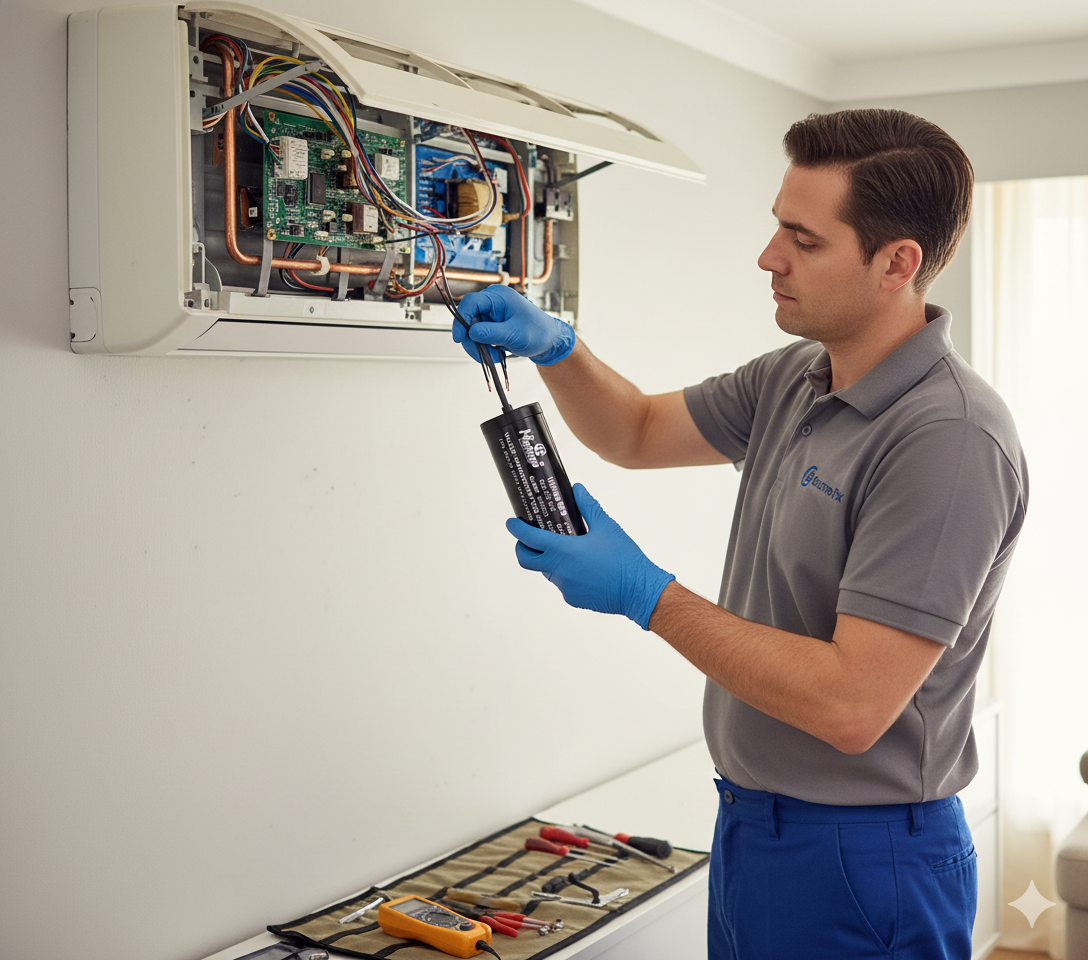
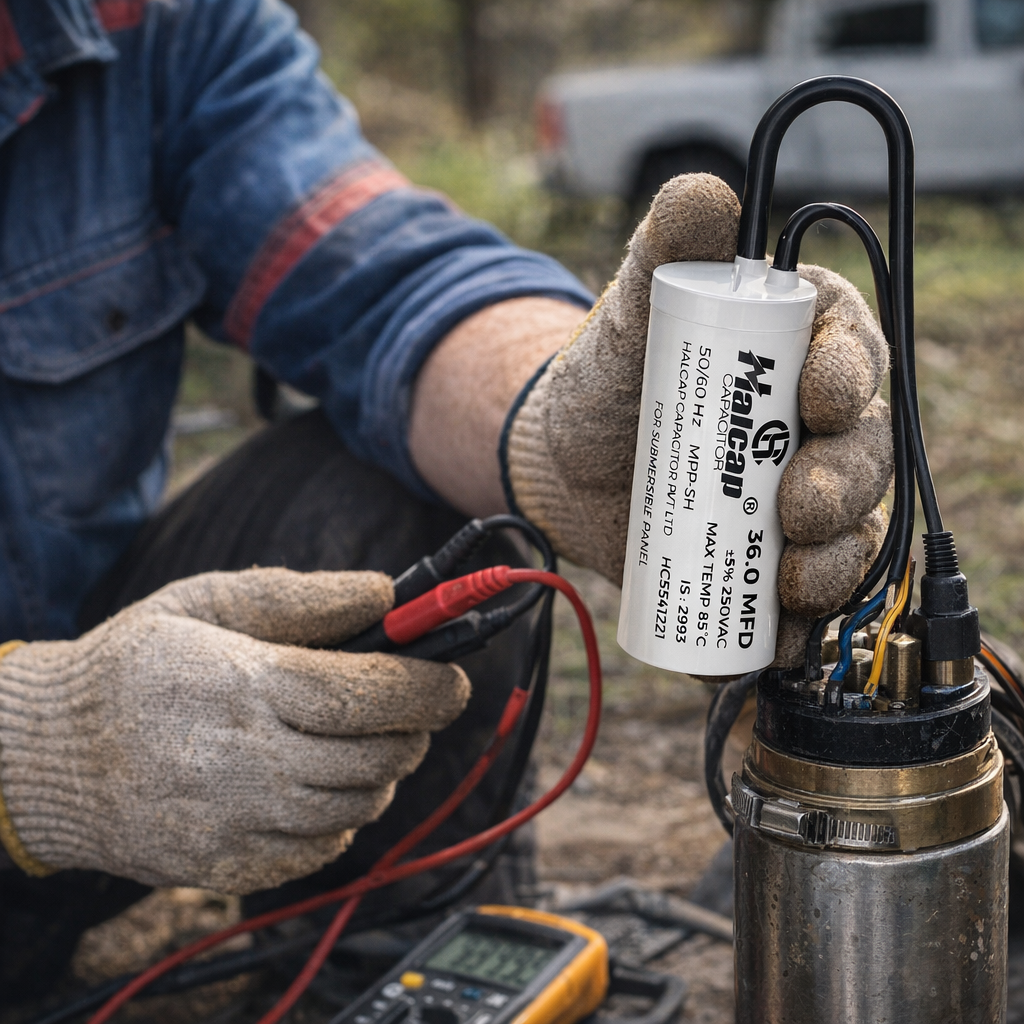
Technical Specifications
| Parameter | Technical Details |
|---|---|
|
Capacitance Range |
40/60 µF to 250/300 µF |
|
Capacitance Tolerance |
±5% |
|
Available Ratings
|
30 µF to 135 µF |
|
Rated Voltage |
250 Volts |
|
Rated Frequency |
50 / 60 Hz |
|
Power Factor / Tangent Loss Angle |
0.002 |
|
Case Material |
PP & Aluminium Can |
|
Dielectric |
Metallized P.P. Film |
|
Insulation Voltage between Terminals |
2 x Rated Voltage AC |
|
Operating Temperature Range |
-25°C to +85°C |
|
Insulation Voltage between Case & Terminals |
2000 VAC |
|
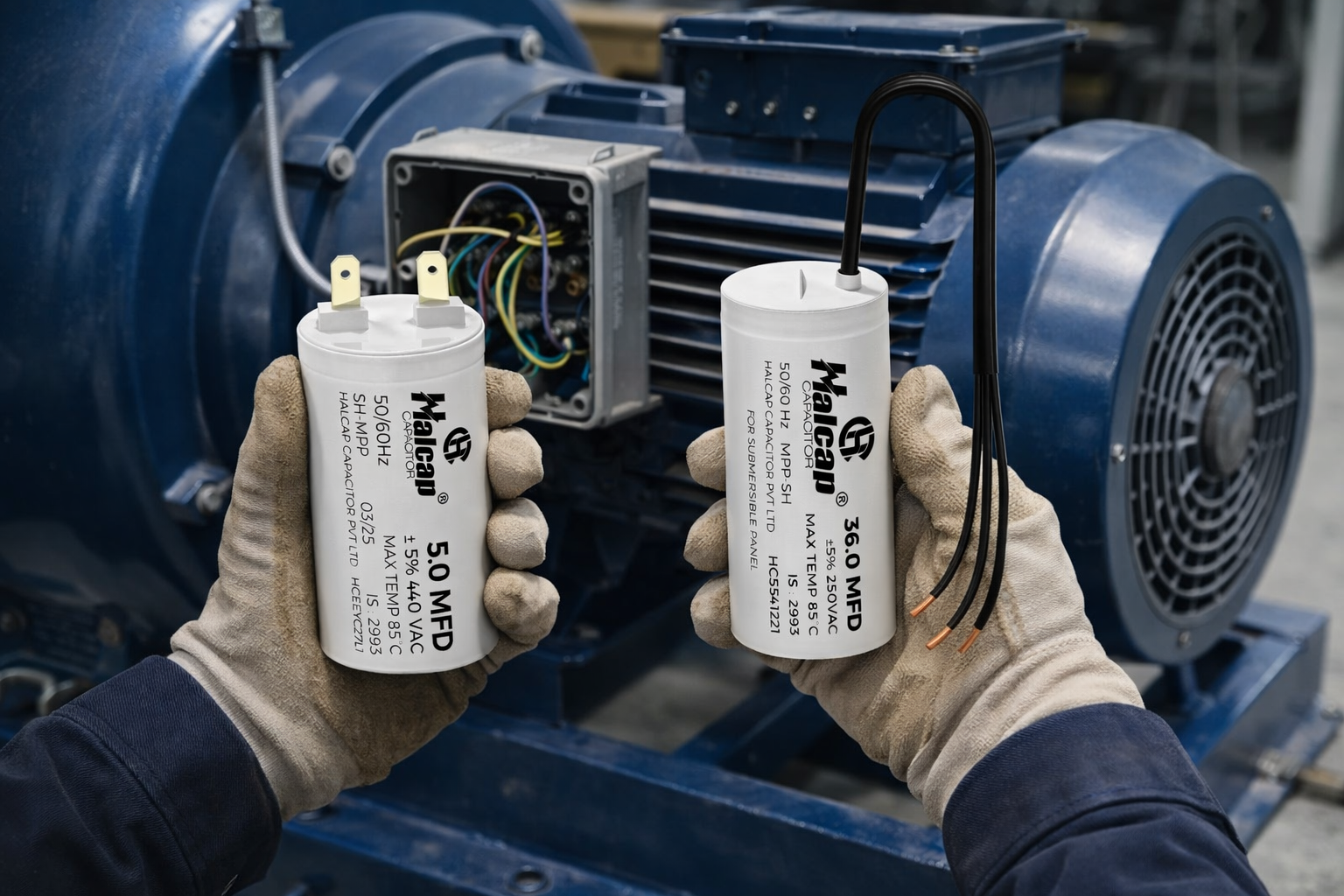
Terminals |
Flexible Wire / Pin Type |
|
Polarity |
Can be connected either way |
|
Safety Class |
P0 |
|
Standards |
IS 2993 – 1998 |